Thursday, December 4, 2025

The 100th Anniversary of the Burning of Old Main

The First Building

Wide angle photo of a stone college building

The Old Main, built in 1892, was the first and biggest building in the early days of Central Michigan Normal. It held multiple classrooms, administrative offices, the library, and multiple lounges for students. As the campus grew, it remained the hub of Central Michigan Normal’s operations.


 The Central Campus in 1925


Postcard of an old college campus with three buildings

 
Map of the 1925 Central Michigan Normal Campus
In 1925, Central Michigan Normal was a small teacher’s college with a student body numbering just over 400. The campus, covered about ten acres and only consisted of five buildings: the Science Building (now known as Grawn Hall), the Gymnasium, the Training School, the residence hall, and Old Main. There were also athletic fields for football, baseball, track and field, and tennis. The map on the left shows the extent of campus in 1925.


The Old Main Fire 

Photo of a building on fire
Around midnight on December 7, 1925, a fire of unknown origin started in Central’s Old Main building. The 1926 Chippewa Yearbook recounts: “The first view of the campus gave the impression that every building was blazing, so sharply were the nearer structures lit up against a background of flames.” The fire lasted until 2:30 in the morning, and little remained of the building. Eyewitnesses recounted seeing the remnants of the 30,000-book library. The loss of Old Main united the faculty, students, and community members who worked quickly to rebuild the destruction at Central Michigan Normal.


Immediate Community Action

Photo of the remains of a building after being burnt down.The Central Michigan Normal community did not focus on what they lost, instead they worked together to keep the school running. The Lansing State Journal of December 8, 1925 stated, “Although the main building on the campus at Central Michigan Normal was a mass of ruins following a fire that swept through it early Monday morning, the school routine had adjusted Monday afternoon and every class met with its instructor.” Just two days after the fire, the State Administration Board met to distribute emergency funds. Central Michigan Normal received $40,000 to aid in building temporary buildings to keep classes in session.

Wide angle photo of a college campus showing four buildings
With the help of community members, the school built three temporary buildings, known as the Sheep Sheds because of their bare-bones construction. They started building them during the winter vacation and finished before the students returned for spring semester.


Building of the New Administration Building

With the burning of the Old Main, Central Michigan Normal—soon to be Central State Teachers College—needed a new main building. The State Administration Board met again, and gave the school $750,000 to build “the new administration building.” Construction started in October 1926. With the new building, some new additions were added to the campus like the central tower, the 1,600-seat auditorium, and a much larger library. The memory of Old Main was not forgotten—the contractor used over 2 million salvaged bricks from the rubble in the construction of the new building.


Close-up photo of an entrance to Warriner HallIn April 1928, the first assembly took place in the new auditorium, with 1,400 students, faculty, staff, and community members. At the request of the Central community who wished to honor the president who led Central through the reconstruction after the Old Main fire, the Michigan State Board of Education changed the name to Warriner Hall in 1939.

Tuesday, September 23, 2025

Congressionally Funded Newspaper Digitization Completed

 by Carrie Marsh, Director, Clarke Historical Library 

Newspapers are among the most enduring records of Michigan’s history and serve as essential resources for uncovering stories that you won't find in other types of records. How were Michiganders impacted by the American Civil War, the Great Depression, or two world wars? How did Michigan towns adapt to economic changes over the past century? An important resource to help answer these questions and many more is our newspapers.

In 2022, the Clarke Historical Library received a Congressional earmark of $135,000 to digitize historical Michigan newspapers and make them openly accessible online. We were one of eleven historical or cultural organizations to receive this funding, which was administered by the National Historical Publications and Records Commission (NHPRC). Between January 2023 and March 2025, Clarke staff digitized portions of 17 historical newspapers, totaling more than 250,000 newspaper pages.

Front page of the Iron Ore,
September 21, 1895
Among the digitized titles was Iron Ore, founded by geologist and mining expert George Newett in Ishpeming. Iron Ore not only covered the mining activities and other news of the Ishpeming area but also reported on mines across the U.S. and around the world. The Clare County Cleaver has been reporting local news and events since 1881, making it the oldest ongoing business in the county. The earmark funds helped us fill in gaps in the Clare County Cleaver’s online coverage between 1976 and 2004. While Monroe Commercial, founded in 1840, is not Monroe’s first newspaper (that’s The Michigan Sentinel, founded in 1825), it was one of the longest-running newspapers under that title for the county. Now available online, thanks to the earmark funds, is the run of Monroe Commercial published between 1859 and 1885.

The 16 newspapers in this project are openly accessible in the Clarke’s online newspaper site, DigMichNews where everyone--community members, families, students, teachers, genealogists, and others--can research Michigan’s rich history documented in historical newspapers. We extend our deep gratitude to Senator Gary Peters and Senator Debbie Stabenow for championing the Clarke’s project and including it in the 2022 omnibus bill.

 A Complete List of the Newspapers Digitized with Congressional Funding
(including links to the digitized content, items with and asterisk will come online soon)

Title

Dates

Clare County Cleaver

1976-1980, 1990-1997, Dec 1998-2004

Menominee Herald Leader

1912-1936

Monroe Commercial

August 1859-November 1860, 1869 (November and December), 1862-1885

Monroe Democrat

March 1880-March 1914

Mount Clemens Monitor

1869 (January and February), 1880-1897, May 1898, 1899-1900, 1901 (January and December), August 1902, 1903-1936

Pontiac Press

1970-1972

Oakland Press

1970-1973

Gratiot County Journal; Gratiot County Herald

1884, 1889-1906

[Ishpeming] Iron Agitator, Iron Ore, Weekly Agitator

1882-1886, 1879-1881

Zeeland Expositor

1893-1896

Zeeland Record

1897-1912

Bessemer Herald*

1847-1945 (some gaps)

Elk Rapids Progress*

1872-1899 (some gaps)

[Orchard Lake] Niedziela (Sunday)*

1891-1894, 1989-1902


Thursday, February 29, 2024

Dr. Lloyd Cofer: A Look Back at a Leader of the CMU Board of Trustees

by Arianna Day

Dr. Lloyd McGee Cofer—the name might be familiar around the Central Michigan University campus. As we wrap up Black History Month and reflect on the 60th anniversary of the first meeting of the CMU Board of Trustees, we share more about this leader who helped shape CMU for nearly two decades. 

Dr. Cofer was born in New York, New York, December 18, 1905. He went to college at Tufts College during the fall of 1924. While he was there, he joined Alpha Phi Alpha, the oldest African American Greek letter fraternity in the U.S.

Dr. Cofer graduated from Tufts in 1928 with his Bachelor of Science degree and then served as the Dean of Men as Fisk University from 1930-34. In 1934, he was hired in the Detroit public schools, becoming the first Black man to be a counselor in Detroit school system. Later, Dr. Cofer served as assistant principal of two different schools and, in 1965, he became Principal at Mackenzie High School. During his more than 30-year tenure with the Detroit public schools, he earned his master’s degree at Columbia University and his doctorate degree at Wayne State University.

Dr. Cofer left the Detroit Public Schools in 1967 to work at Michigan State University, where he served in many capacities focused on increasing the recruitment and retention of Black students until his retirement in 1979. At MSU, he created a development program as well as special services for minority students at MSU (MSU News May 27, 1971, p. 6). 


Dr. Lloyd M. Cofer at the first
CMU Board of Trustees Meeting, February 24, 1964

For Central Michigan University, Dr. Cofer is most well-known as a charter member of the Board of Trustees and the namesake of a long-standing scholarship for Central students. On the 60th anniversary of the first meeting of Central Michigan University’s Board of Trustees, we recognize Dr. Cofer’s contributions to the Board.

In February 1964, Dr. Cofer was among the first group of eight who was appointed by Michigan Governor George Romney to CMU’s newly formed Board of Trustees. Joining him on this group that met for the first time on February 24, 1964 were Jean Backus, Willis Campbell, Katharine Hafsted, Lawrence Rahilly, E. Allan Morrow, John Sivier, and Walter Wightman.

During his 17 years of service on the Board of Trustees, Dr. Cofer was elected chair three times, the first time being in 1967, just three years after his initial appointment. Among the major changes that Dr. Cofer oversaw as a Trustee, Cofer was the Chair of the Board that approved Amendment V to the Student Bill of Rights and Responsibilities, which abolished the practice of in loco parentis. Cofer supported the students in their efforts to assert their rights and to demand that the university stop acting “in place of the parents” and monitoring students' behavior.

Many other developments and progress occurred during his 17 years on the Board including:

Outside of education and higher learning, Dr Cofer found the love of his life in Evelynne J Jones. Together, they had two daughters and they remained married until her death in 1972.

Dr. Cofer was always devoted to students, working up to the time of his death on January 11, 1980. In death, he was remembered for his contributions to education in Michigan and across the U.S. Rev. Malcolm G. Dade of St. Cyprian said of Dr. Cofer, “Lloyd never went for a job; every position sought him.” Horace C. King, MSU Registrar and Professor, said, “[Dr. Cofer] influenced higher education not only in the state of Michigan but also on a national level.”

Two weeks after the passing of Dr. Lloyd M. Cofer, the CMU Board of Trustees established the Lloyd M. Cofer scholarship. Created in 1980 in his memory, the scholarship provided for full tuition and fees awarded to a deserving student who is the graduate of a public high school of the city of Detroit. The scholarship still exists and today and "recognizes a select few Detroit high school graduates for their dedication to the advancement of underrepresented groups in America."

Friday, January 26, 2024

In Search of Sibouin

by Tristen Woodruff

When working on historical projects, the need to conduct at least some minimal sleuthing is part and parcel within the line of work. This sleuthing can range from the simple fact check, to a slightly more in-depth academic journal cross reference. Rarely, however, is the rabbit hole of research followed to its proverbial wonderland. In the case of the search for the a set of islands in the Great Lakes, however, the journey to wonderland became the only way to determine the facts of the matter.

While working on the metadata for the letters of noted Civil War officer Orlando M. Poe, I was drawn down this path. Prior to the Civil War and his promotion to Major General, Orlando Poe served as Second Lieutenant of the Army Corps of Topographical Engineers. The Topographical Engineers were a part of a large survey of the Great Lakes region prior to the War and were notable for the many islands and shorelines they mapped during this time. During the summer of 1857, Poe was assigned to chart and map the eastern portions of the Saginaw Bay. This would lead to a direction from his commander, George G. Meade, to map a set of islands identified by Meade.

Meade's longhand: "the ??? islands"

The problem was that, in Meade’s longhand, what were the name of the islands. Did they begin with an L, or an I? Was the second letter an E? The word ends in “o-u-i-n,” but what islands in and around Saginaw Bay end in “o-u-i-n”?

Saginaw Bay from J.H. Colton's
Map of Michigan, 1857
.
Click to enlarge.
Looking at a map today, the letters on the page seemed odd because there are no contemporary islands on current maps with similar letters. When looking into maps of the 1850s, a name that seemed similar to Meade’s writing did not appear, either. Thus began the spiral into figuring out the true name of these islands. The first place needed to look was in the official reports of the Great Lakes Survey that the Corps released a few years after Poe was first instructed to map these islands. In these reports, I searched for Poe’s name to see the location where Meade reported that he sent Poe. With this, there was, in fact, a location that Poe was sent with the name ‘Sibouin’ Islands. But, there was no map to point to them.

The only known location of these mystery islands, based on the letters and the report, was that they were in the eastern portion of the Saginaw Bay. Naturally, knowing the general location of the islands, I attempted to search the national and local newspapers to find them, including the millions of scanned pages available through the the Library of Congress and the Clarke Historical Library, but to no avail. Surely then, they would exist in the national archives! Still no such luck. Even looking at the amazing collection of maps provided by the David Rumsey Map Collection, no islands named ‘Sibouin’ were mapped in the eastern Saginaw Bay. Finally, I searched “Sibouin” in Hathi Trust, which includes numerous US and State of Michigan government reports among the 17+ million digitized volumes in the database, and there was only one document about a set of islands in the Great Lakes with the name “Sibouin” – Meade’s report mentioning where he sent Poe.

Armed with the knowledge that George Meade was the only person referring to these islands with the name “Sibouin,” I returned back to the report for more clues. Near these islands, Poe was instructed to map the wider “Wild Fowl Bay.” This was helpful as it even further narrowed our search, but there was still no record of the mystery islands in Wild Fowl Bay. I then moved to the amazing Hathi Trust again in search of “Sibouin” (or variations of the spelling). Here would be the key to this whole mystery, the Report of the Chief of Engineers of 1860 had a reference to the “Sebouin Islands.” The report also listed latitude and longitude for the mystery islands, finally!

Map of Fairhaven Township,
from the Atlas of Huron County,
Michigan
, 1890
. Click to enlarge.
Using the maps of David Rumsey, current map websites, and the coordinates of the Chief of Engineers report, I could divine a location. The answer was revealed, hiding in plain sight right in Wild Fowl Bay. The Sibouin Islands were in fact the modern day Maisou Islands of Huron County. These islands are now apart of the Wild Fowl Bay State Wildlife Area and are no longer owned privately, but back in the 1850s they had been called Kate Chai Island and North Island. These islands had gone through many name changes since the 1850s, and that had done a good job of obfuscating their prior titles. These name changes, however, would eventually be peeled back, due in large part to the help and skills of Bryan Whitledge, without whose guidance I would not have fully figured out even the name of these mystery islands that seem to exist only now as ghosts of the documents of the 1850s.

Tuesday, November 21, 2023

Unearthing Enchantment: Discovering Hidden Fairy Tales in the Clarke Historical Library

by Katie Clausen, visiting scholar and recipient of the Clarke's 2023 International Children's Literature Research Grant

For five days in August 2023, I nestled into a quiet corner of the Clarke Historical Library and rigorously searched for fairy tales waiting to be discovered. With the generous support of the International Children's Literature Research Grant, my quest was to unearth captivating stories that could resonate with young readers. As an Information Science scholar specializing in fairy tales, my research focuses on identifying stories that offer opportunities for girls and women to connect their experiences with these timeless narratives.

Some interpretations of classic fairy tales (*cough*Disney*cough*) have perpetuated harmful stereotypes and ideals, often portraying female characters as submissive, beautiful, and thin. Fairy tales need not reinforce such limiting narratives. Indeed, iconic princesses like Cinderella and Sleeping Beauty may seem one-dimensional at first glance, but they can be understood more profoundly, revealing layers of resilience, determination, and inner strength. However, it's equally important to acknowledge a world of untapped potential in fairy tales, unknown or lesser-known, waiting to be discovered.

Perhaps we must reimagine what heroism and empowerment mean for today's generation. A more complex, inclusive, and diverse narrative landscape—one that offers a broad spectrum of stories for girls and women of all backgrounds—reinforces the fundamental right of everyone to see oneself as the hero of their own narrative. Amidst my research journey at Clarke, I was fortunate enough to stumble upon fairy tales that embody richness and complexity.

Published in 1877, "The Toy Princess" by Mary de Morgan1 is a fairy tale about a girl named Ursula who is born into a regimented kingdom where she is restricted from expressing any emotion. No laughing or crying, and people “never said more than was quite necessary, as ‘Just so,’ ‘Yes indeed,’ ‘Thank you,’ and ‘If you please.’” Ursula’s father, the king, wants the successor to his throne to be obedient, detached, and well-behaved. With magical help from a fairy godmother, Ursula escapes the kingdom, replacing herself with a mechanical toy princess who looks identical to her and behaves in the same polite and reserved manner as the people in the kingdom. Ursula is taken to a humble fishing village, where she grows up with a loving fisherman and his family. Years later, the kingdom is shocked when, by chance, the toy princess's head falls off, revealing its true nature. I won’t give the ending away…please read it!2

In the 1912 collection, The Maker of Rainbows,3 a fairy tale titled “The Rags of Queen Cophetua” retells the story of a legendary African king. King Cophetua of Ethiopia falls in love with a young woman he sees begging for money. They marry, and she becomes Queen. But in this 1912 version of the fairy tale, the Queen grows weary and longs for independence. When she opens the box containing her old, tattered clothes, she remembers who she once was and puts on the ragged garments. Suddenly, the king accidentally interrupts her. Seeing her in her tattered dress, the king recognizes the sadness in her eyes and asks, “Are you weary of being queen?” These two characters love each other immensely, but is love enough? This fairy tale contains themes of loss, longing for independence, love, identity, and change.

Illustration from,
"The Rags of Queen Cophetua"

Both of these fairy tales offer new and profound interpretations that delve into the complexities of identity and self-discovery. My research, supported by the International Children's Literature Research Grant, underscores that while well-known princesses can be read with depth and complexity, untold stories are waiting to be uncovered in libraries like Clarke. Let us remember that these narratives are not only vehicles of enchantment but also tools of empowerment, capable of reshaping our perceptions and inspiring new generations of readers to see themselves in the stories they cherish.

Note: I would like to extend my deepest appreciation to all who have made this grant possible, especially Dr. Susan M. Stan, whom this grant honors. Her legacy and dedication to children’s literature paved the way for scholars like me to pursue our passions and make a meaningful impact.

[1] Mary de Morgan, "The Toy Princess," from On a Pincushion, and Other Fairy Tales, 1977 (PZ8 .D399 On3).

[2] Links to "The Toy Princess" point to an anthology by Louey Chisholm, The Enchanted Land : Tales Told Again, 1906, which includes a reprint of "The Toy Princess" authorized by Mary de Morgan.

[3] Richard le Gallienne, The Maker of Rainbows, and Other Fairy-tales and Fables, 1912 (PR4881 .M3 1912).

Tuesday, November 7, 2023

The 100th Anniversary of Hemingway's “Three Stories and Ten Poems”

written by Magdelyn Gipe

The Clarke's copy of
Three Stories and Ten Poems
Ernest Hemingway has solidified his place in the American literary canon as a prolific author and cultural touchstone. He is most well-known because of noted books such as A Farewell To Arms (1929), The Old Man and the Sea (1952), and The Sun Also Rises (1926). Although these works are pieces that helped him rise to fame and stay there, his earlier writings set the tone for his career.

The earliest book in Hemingway's long bibliography debuted 100 years ago. Three Stories and Ten Poems was released in Paris, France, on September 1, 1923. Privately published when Ernest was just 24 years old, this first collection did not lead to Hemingway becoming exceptionally famous. However, the book was well received by critics and those who could get their hands on it. With only 300 copies made, securing one at the time was no easy feat, and it is even more of a tall task, today. In 2018, the Clarke was pleased to acquire one of these rare copies, which was made possible by the generous donors who have supported the Clarke Historical Library's Hemingway in Michigan collection over the years.

This collection of stories and poems was inspired, in part, by Hemingway’s experience during World War I and his summers spent in Michigan from his birth through his late adolescence. Indeed, the story, “Up in Michigan,” is the centerpiece of this collection of writing. The controversial story, set in fictional “Hortons” Bay, Michigan, graphically describes Jim forcing himself on Liz on a Lake Charlevoix dock after a night of drinking. It is said Hemingway’s own parents refused to have the book in their home because of the content.

List of best short stories of 1923, from the Omaha Morning Bee

100 years after the first collection of fiction by the future Nobel laureate hit the shelves, there is little doubt of Ernest Hemingway's legacy as a writer and cultural icon. For researchers examining Hemingway's life and career, his formative experiences in Michigan offer a great deal of insights. Thanks to our donors, the Clarke is proud to support such research with original sources, like Three Stories and Ten Poems, to accurately document Hemingway’s life with the works and writings he produced.

Thursday, August 24, 2023

The 100th Anniversary of the Central Marching Band

by Bryan Whitledge, adapted from a 2014 post by Casey Gamble

100 years ago, in September 1923, the students of the Central Normal College were hustling around in a frenzied attempt to register for classes (Central State Life, 9/25/1923, p. 2). The only peace to be had on campus was coming from the newly formed school band. It was the band’s duty to lighten the atmosphere and remind students that their first days in Mount Pleasant were the start of an exciting chapter of their lives. A century later, the CMU Marching band is still setting the tempo of the return to the Mt. Pleasant campus. The drum line’s infectious beats pulse through the air while the Leadership Safari participants explore their new campus. The blare of the trumpets in unison is the soundscape for students moving back into residence halls. And while friends meet up after three months of summer vacation, the Marching Chips are on the practice field and the tick-tick-tick of the metronome sets not only their cadence, but the cadence of all of those in earshot.

Group photo of the 20 or so marching band members in 1923
Central Marching Band, 1923

The first mention of a “school band” goes back to January of 1922, when the idea was “referred to [Central’s] Ways and Means Committee." It seems that they hoped to organize by that fall, but their plans didn’t come to pass until the next year. In the first issue of the Central Normal Life of the 1923-24 school year, the headline, “That Umpah Band an Assured Fact” triumphantly announced that Central would have a “real Normal band, instruments, uniforms, and even a drum major.” And that week, the band, which was organized by the Department of Music and lead by Mr. Powers (the man for whom Powers Hall – the old music building – is named), was lightening the mood around the Central campus with their music.

By November of 1923, the band had new uniforms and were ready to be a formidable 12th man for the football team when Central squared off against Alma College down in Alma later that month: “The new maroon and gold uniforms … are to be donned on that occasion, and a formal army of musicians will appear upon the Presbyterian battlefield* in the colored garb of war.”

CMU MArching band at the end of the football field, circa 1980s
CMU Marching Band, circa 1980

100 years later, the Marching Chips are still the loudest supporters of Central’s football players when they take the field. And getting to gameday involves quite a bit of practice and hard work. During band week, which happens right before the start of classes, the band members are on the practice field all day, every day, whether in the blazing heat or the pouring rain. Throughout campus, the Marching Chips break into sections that work on the songs and routines that will be on display for thousands of fans throughout the fall. All of the musicians put in hours of work to learn the songs for football halftime shows in addition to the dozens of pregame tunes, stand times, and of course, the CMU Fight Song.

Marching Chips in a line with drum major running, in 2014
Marching Chips, 2014
But the work doesn’t stop after band week—members of the Marching Chips are first and foremost CMU students. Once classes start, many of the music majors will be taking 10+ classes, and they combine that with marching band practice a few hours in the afternoon, except for game days when some sections will be practicing by 7:00 am. Graduate students and senior section leaders will help the younger marchers keep each foot together and each note in sync until the formations are performed to perfection.

And what is the payoff of all this hard work? After 100 years, the Marching Chips still brings cheer to the students of CMU when they need an upbeat song to get them through their studies. They continue to uplift the football team and entertain the crowds at halftime and throughout the game. The members hand down beloved traditions across multiple generations of band members. And the Marching Chips make lifelong memories and learn some of the most important lessons of their college experience in terms of discipline and perseverance. 

*Alma College was founded as a private liberal arts college affiliated with the Presbyterian Church in 1886 and remains so to this day.

Friday, June 9, 2023

Clarke Historical Library student Andrea Howard is now a Visiting Processing Archivist

by Marian Matyn


Portrait of Andrea Howard
Andrea Howard interned for Archivist Marian Matyn in the Clarke Historical Library during Spring term 2014. During her internship, she spent most of her time on the Aladdin Housing Company collection, sorting through the personal records of Aladdin founder William Sovereign and his son, Will Sovereign, Jr. Andrea said, "I loved finding unexpected things, like photographs of pilot Jeanette Lempke, William Sovereign’s wife, and her trailblazing flights in the 1920s. I knew pretty quickly that I’d also found a new career path."

Fast forward about 9 years, Andrea has earned a Master of Library and Information Science degree from the University of Wisconsin-Milwaukee. After a brief stint as a Local History Librarian in Ohio, she is currently a Visiting Processing Archivist at Grand Valley State University. Andrea stated, "Drawing directly from my processing experience at the Clarke, I am currently working to process a large collection of zoning and urban planning materials. I’m excited to contribute to the field in the next couple of years by becoming involved in professional archival organizations and giving conference presentations. "

"Sometimes I wonder where I would be if I had not been flipping through a course catalog my senior year, looking for a history course and noticing the archives internship option for the first time," Andrea reflected. "My internship at the Clarke taught me fundamental archival principles and skills and kindled my love for archives, but it did so much more than that. I developed a lasting friendship with Marian Matyn; I regularly turn to her for advice and encouragement and highly value her opinions and insights. That internship was also the only hands-on, official archival internship I had before entering the job market. I know that the experience I gained at the Clarke was instrumental to my job search success. If you are on the fence about interning in the archives, I say go for it! You never know what you might find."

We are excited to see how Andrea's career has taken shape and wish her much success in the future!

Friday, October 28, 2022

Tales of Hauntings in Michigan

by Aubrey Dickens and Sara Daniels

With Halloween soon approaching, there are many fun ways to celebrate the holiday. And if you're a fan of scary stories, Michigan has countless spooky attractions to get your thrills.

Grand Rapids is one of Michigan’s most beloved cities. A hub for art and culture, this city in Western Michigan has plenty to offer, including something for haunted house enthusiasts.

Once located where the Bell Telephone Company currently stands, the Judd-White house was home to young married couple Warren and Vashti Rowland. Having married in 1907, their tragic story in Grand Rapids began when Warren started a job at G.R. and Indiana Railroad, where he lost his leg in a gruesome railroad accident. After Warren’s accident, he was fitted with a wooden leg, a piece of him that would later contribute to the couple’s tragic end.

As the Grand Rapid Press of July 10, 1909 (pictured at right) reports, those who knew the couple said that Warren and Vashti never appeared to be happy with each other. Vashti’s sister expressed a long-held fear that Warren would murder her sister, recalling once seeing Warren chase Vashti down the street with a razor. After months of the couple living unhappily together, the two separated, leaving their residence at the Judd-White house vacant. This would be the last time the room would have any peace.

A short time after the couple separated, Warren called upon Vashti, presumably to make peace with his estranged wife. But the opposite came true.

As Warren and Vashti made their way into their former home, Warren removed his wooden leg and beat Vashti over the head. As Vashti was lying on the floor, unconscious, Warren locked the door to the room and began to seal the windows with towels to close any gaps to make the room airtight. He then went to the gas fixture on the wall and began to fill the room with a noxious gas. Warren, however, was not finished with his task. Using a razor, he attempted to kill himself.

When their bodies were discovered two weeks later, reports show that Warren had not cut himself badly enough to kill himself, and instead most likely passed from the fumes. After hearing of the tragic story, locals speculated that Warren was a mad man who became angry and jealous after believing his wife was seeing someone else. The public maintained this opinion. According to the Grand Rapids Press article, “No note of farewell to the world was found in the room, nor any clue regarding the motive of the crime.”

After their death, the room remained vacant for some time, with no one wanting to stay there due to its horrid past. In 1920, the Judd-White house was torn down, and in its place stands the Michigan Bell Telephone Company building. Although the house is gone, people claim that the spirits of Warren and Vashti Rowland are still there today.
**********

Among the repertoire of haunted places, mental asylums are infamous for being severely haunted by former patients and staff who lived within their walls. In Michigan, Traverse City State Hospital is one of these abandoned places, with a history of suffering and horror that has outlived the hospital itself.

In 1885, Traverse City State Hospital was opened and remained so for a little over a century before it was closed and abandoned.

Northern Michigan Asylum Report, 1908
The stigma of mental health remains an obstacle even now, as it was during the 19th century, when mental hospitals were still in their infancy in the U.S. Although these hospitals aimed for the greater good, many patients suffered cruelty at the hands of doctors and staff who ran these institutions. The practice of lobotomy, the use of straight jackets, and periods of isolation were common in mental hospitals, with the belief that they would help the patient. However, thanks to our better understanding of modern psychology, it is now known these practices created more harm than good.

As the years passed and the state hospital became more decrepit, the building became a spot for vandals and those curious to explore. From these visits come the stories of the ghosts who haunt the building. It is reported that individuals have seen faces appear through windows, radios emit nothing but static, or people sense the feeling of someone lurking. Many patient deaths occurred at the hospital, with the common forms of death being disease and suicide.

Throughout the years, horror stories of the abandoned hospital have emerged. An internet urban legend tells of the story of two young boys who were patients at the hospital and how one disappeared.

Northern Michigan Asylum Tunnels

The two boys were outside playing and had begun to wander. As their trek across the grounds continued, they ventured into the underground tunnels that traveled beneath the buildings. As they continued to walk down the tunnels, they encountered a man who was an escaped patient of the hospital and had been living in the tunnels ever since his escape. Terrified of the man, the boys ran out of the tunnels, but sadly only one would make it out. Having run for some time, one of the boys looked behind for his friend, but he was nowhere to be seen. After reporting the incident to the hospital staff, they searched for the missing boy but could find no trace of him other than his St. Raphael necklace. Over a month later, the boy’s remains were found at what now is known as the hippie tree–a name created from the delinquent activities that took place there.

Northern Michigan Asylum Report, 1908
(click to enlarge)
While this urban legend does not give the time of this incident, looking into a report from the Board of Trustees of Traverse City State Hospital, fourteen men were discharged from the hospital in an unimproved mental state in 1908. Earlier in the report, it is also stated that of 505 patients admitted, “15 were homicidal or had threatened homicidal assaults.” Is it possible that one of the men discharged was also the murderous man in the tunnel? While legend says he escaped, is it possible that he could have taken refuge in the tunnels after being discharged?

**********

Before even the nation’s first mental hospital opened its doors, and before Michigan became an official state, the territory in the Great Lakes region saw both violence and sweeping changes. Like with the case of Warren and Vashti Rowland and the chilling conditions of Michigan’s mental asylums, colonization and the conflicts between settlers and Indigenous peoples are remembered not just through history books, but through hauntings.

From the book, Haunted Houses of Grand Rapids, comes the tale of Big John, an Ottawa fur trapper from the 1850s. In 1936, Grand Rapids homeowners Lillian and Tom Rush encountered a ghostly figure in their basement. While firing guns at their in-home firing range, Lillian saw a man emerge from the furnace, “tall and somber, with a high-crown hat of the type worn by bad men in old western movies” (p. 11-12). Wearing two long black braids and a watch chain, the specter of Big John stood silently in their basement before disappearing as abruptly as he had appeared.

Big John’s apparition was a remnant of the Michigan fur trade. He once lived in a wooden house located where Lillian and Tom’s abode later stood, where he trapped beavers, mink, lynx, wolves, and bears alongside his wife and two sons. In 1857, Big John’s family was rumored to have fought over the furs, a fight that ended in John’s mysterious disappearance. While his body was never found, people of Grand Rapids believe he haunts the area to this day.


Aerial View of Grand Rapids, circa 1910 


Murder-suicides, asylums, disappearances, and apparitions—Michigan has countless chilling tales to offer this October. But its ghost stories also get at something deeper than just raising goosebumps. Our ghost stories serve as ways of trying to understand our struggles through history. Beneath the spectacle of many of these stories lies real lives: women facing violence like Vashti, Michiganders struggling with stigma surrounding mental health before modern psychology, and the bloody history of colonization.

***********
Bibliography
 
Don Farrant and Gary Eberle, Haunted Houses of Grand Rapids: chilling, authentic local ghost stories .... Ada, Mich.: Ivystone Publications. ca. 1979-82.
 
Northern Michigan Asylum, Report of the Board of Trustees." Lansing, Michigan: Wynkoop Hallenbeck Crawford Company, State Printers. 1908.

"Used Wooden Leg To Stun His Wife," Grand Rapids Press. Grand Rapids, Michigan. July 10, 1909.

Tuesday, October 4, 2022

Celebrating Major Moments in CMU's Homecoming Traditions

by Magdelyn Gipe

Break out the gold, ruby, and silver! 2022 marks the milestone anniversaries of a few major events in Central’s Homecoming traditions.

Connie Wilson, Queen, 1972
This year is the 50th anniversary of Connie Wilson being crowned Homecoming Queen. Ms. Wilson was the first Black woman to be elected Homecoming Queen at Central. In Fall of 1972, Ms. Wilson, an elementary education student from Saginaw, was a sophomore and the Towers executive council sponsored her as a candidate for the Homecoming Court. Involved in both the Organization of the Black Student Union and in the Black Voices of CMU, she had a great deal of support across the campus. In addition to being the first Black woman honored as Central’s Homecoming Queen, she was also the first Homecoming Queen crowned in the new Perry Shorts Stadium, which was dedicated during Homecoming of 1972.


Jodi Urban and John Nader,
Queen and King, 1982

2022 also marks the 40th anniversary of having a Homecoming King join the Queen as part of the Homecoming Court. Although, the first Homecoming King wasn’t elected until 1982, it wasn’t the first time that men threw their names in the hat for Homecoming royalty. Beginning in the 1950s, there were regularly men, like Edna in 1950 or the perennial also-ran, Elvira Scratch, dressing up in costume vying for the title of Queen. Many people got a kick out of the novelty candidates, but the men never ascended to the Homecoming Court. That changed with Central’s first Homecoming King, John Nader. Nader was a senior at the time of his election and was sponsored by the Woldt-Emmons residence halls. Nader was reported as wanting to be a presence in the community as part of his role in the Homecoming court, saying that he planned to “take an active part in speaking with off-campus groups to represent CMU.”

Jocylin Stevenson and Todd Price,
Gold Ambassadors, 1997
Finally, this year is the 25th anniversary of the removal of Homecoming royalty and the creation of the Maroon and Gold Ambassadors. The Gold Ambassadors effectively replaced the Homecoming Queen and King, and the Maroon Ambassadors replaced the Court. Since 1997, all of the Homecoming Ambassadors have been nominated based on merit, particularly students' leadership, campus involvement, and community service. In 1997, Todd Price and Jocylin Stevenson were elected as the first ever Gold Ambassadors. Both were leaders on campus: Stevenson was a senior criminal justice major, minoring in drug and substance abuse prevention, and Price was a senior interpersonal and public communications major, minoring in journalism, advertising, and marketing.

Since the first Homecoming in 1924, the traditions at Central have evolved and grown. Next year, 2023, will give us a chance to mark milestone anniversaries of the cardboard boat race and the medallion hunt, and the year after that will be one century of CMU Homecoming. Fire Up, Chips!

Tuesday, September 13, 2022

Celebrating CMU's 130th Anniversary

by Magdelyn Gipe

As we embark upon a new academic year, Central Michigan University celebrates the 130th anniversary of its founding. On September 13, 1892, the Central Michigan Normal School and Business Institute (it wouldn’t be known as Central Michigan University until 1959) opened its doors for the first time. Of course, the doors that were opened were in downtown Mt. Pleasant, about one mile north of the current Central campus. 31 students were in attendance that day, with classes taught in rental rooms upstairs in the Carpenter Building, which sat on the southeast corner of Main and Michigan streets. Work on the first campus building started six days later, on September 19, 1892. The building, known as “Old Main,” opened in 1893, when students first attended classes on what is now the Central campus. 

Central's "Old Main" Groundbreaking, September 19, 1892

From the beginning, Central largely existed to train and educate teachers. As such, Principal Charles Bellows organized the school into five departments: Normal (training teachers), Academic, Commercial, Industrial, and Music & Art. The Commercial Department is what gave the school the name, “Central Michigan Normal School and Business Institute”; at that time, “business” often meant basic accounting, ledger-keeping, stenography, and penmanship. Bellows is personally responsible for the Music & Art Department, using his own funds to organize a Conservatory for Music. 

Most students who attended Central that first year were from rural areas in and around Isabella County, and often were eighth-grade graduates. In the early days of the institution, it was not uncommon for students to attend for a short time before obtaining a teaching certificate by taking a county teaching exam that allowed students to fill teaching jobs in rural one-room schoolhouses throughout central and northern Michigan. Whether some of those in the first class of students left Central because they passed a county teaching exam or because of another reason, twenty of the original 31 students graduated from Central that first year.

In the 130 years since that historic day, Central Michigan University has substantially changed. Instead of 31 students on the first day of classes, there are over 15,000 students at Central this fall. Classes aren’t held in rental rooms in downtown Mt. Pleasant anymore, but in any of the more than 25 academic buildings. Campus has grown from an initial investment of ten acres and $25,000 to a world-class university sitting on nearly 500 acres with an annual operating budget of over $400 million. What has not changed over the course of 130 years are the fired-up attitude, the can-do spirit, and the genuine kindness Central’s students bring with them each fall.

CMU Students in Kelly/Shorts Stadium at Leadership Safari, 2022


Thursday, July 7, 2022

Abundant Waters Digital Exhibit Now Online

by Sara Daniels

3D view of the Clarke's "Fur, Freighters, Fuels" section of the exhibit

The Clarke Historical Library officially opened its most recent exhibit,
Sunset at CMU Biological Station,
Beaver Island
Abundant Waters: Our Most Precious Resource
on February 22, 2022. Now, we are proudly presenting the exhibit's digital companion. Exploring the state's cultural, environmental, political, and economic history through its 3,200 miles of freshwater coastline and 76,000 miles of rivers, this website offers new ways to approach the exhibit's driving question: how often do we actually think about our relationship with Michigan's most precious resource? 

Home to over 20% of the world's surface freshwater supply, Michigan is a state surrounded by, defined by, and embroiled in issues of water. The digital exhibit of Abundant Waters delves into the depths of Michigan's past in order to uncover our lasting connections with water and reveal how our future and the future of Michigan’s lakes and rivers are one in the same.

The digital exhibit is a culmination of months of research and community efforts. With contributions from WCMU Public Media, CMU professors and students, and members of the Saginaw Chippewa Tribal Conservation Community, the exhibit approaches Michigan's waterways through a multitude of perspectives. It provides an engaging and multidimensional platform on which to experience for yourself Michigan's greatest resource—water. From a 3D perspective of the Clarke’s physical Abundant Waters exhibit to a series of videos exploring the conservation of Michigan’s waters, the digital exhibit contains a number of fresh features and new approaches to exploring this topic and showcasing the many ways humans have interacted with and been affected by water.


Ernest Hemingway canoeing in northern Michigan


Take, for instance, one of Michigan's flashier roles as a rum-running capital, with 75% of the alcohol smuggled into the United States during Prohibition passing through one of Michigan's water borders with Canada. Or consider Michigan's status as the “Arsenal of Democracy” during World War II—it went beyond building bombers, with one of Michigan’s own Chris-Craft ships among the first to make landfall in Normandy on D-Day.

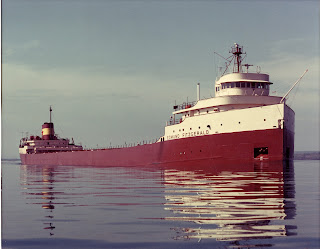
Michigan's waters have occupied countless other roles in personal, state, and national histories, which the Clarke explores in its digital exhibit. Its Great Lakes have been a 
The Edmund Fitzgerald
graveyard to hundreds of ships
; its northern freshwater springs have been touted as miracle healers. Its ports and straits have acted as home to both war and industry, while its waters hold a sacred, life-giving status for Indigenous communities. 

To the famous American novelist Ernest Hemingway, Michigan was "a great place to laze around and swim and fish when you want to. And the best place in the world to do nothing." To others, it’s the best place in the world to do something—for the Soo Locks, that’s 80 million tons of commodities navigating the St. Mary’s falls each year. For each of the hundreds of millions of others to come in contact with Michigan, its waters represent something unique and personal.

Abundant Waters taps into this complex tapestry, illuminating the webs of connection flowing through Michigan's waterways and tying together facets of history and human experience. The exhibit aims to help the public reflect on our complex and meaningful relationships with water and to help us understand how water connects us all across time and space. 

Canoe manifest bound for Drummond Island c. 1818

Ultimately, Abundant Waters explores the lakes and rivers of Michigan as cultural, spiritual, and commercial epicenters, ones that define and sustain the region physically, ecologically, and economically. It imagines water in its many forms—mover of industry, mode of exploration, borderlands between/hubs within nations and peoples, and carrier of story—and in its ultimate form, as the veins that carry the lives of not just Michiganders, but people everywhere. Visit the digital exhibit today, with its new features and extended access to photographs and primary documents, to discover for yourself how we see ourselves—and each other—in Michigan's great waters.

The Abundant Waters exhibit is funded, in part, by an award from the American Library Association as part of the ALA’s American Rescue Plan: Humanities Grants for Libraries program.

3D view of the Clarke's "Disasters" section of the exhibit