Showing posts with label Hemingway Ernest. Show all posts

Tuesday, November 7, 2023

The 100th Anniversary of Hemingway's “Three Stories and Ten Poems”

written by Magdelyn Gipe

The Clarke's copy of
Three Stories and Ten Poems
Ernest Hemingway has solidified his place in the American literary canon as a prolific author and cultural touchstone. He is most well-known because of noted books such as A Farewell To Arms (1929), The Old Man and the Sea (1952), and The Sun Also Rises (1926). Although these works are pieces that helped him rise to fame and stay there, his earlier writings set the tone for his career.

The earliest book in Hemingway's long bibliography debuted 100 years ago. Three Stories and Ten Poems was released in Paris, France, on September 1, 1923. Privately published when Ernest was just 24 years old, this first collection did not lead to Hemingway becoming exceptionally famous. However, the book was well received by critics and those who could get their hands on it. With only 300 copies made, securing one at the time was no easy feat, and it is even more of a tall task, today. In 2018, the Clarke was pleased to acquire one of these rare copies, which was made possible by the generous donors who have supported the Clarke Historical Library's Hemingway in Michigan collection over the years.

This collection of stories and poems was inspired, in part, by Hemingway’s experience during World War I and his summers spent in Michigan from his birth through his late adolescence. Indeed, the story, “Up in Michigan,” is the centerpiece of this collection of writing. The controversial story, set in fictional “Hortons” Bay, Michigan, graphically describes Jim forcing himself on Liz on a Lake Charlevoix dock after a night of drinking. It is said Hemingway’s own parents refused to have the book in their home because of the content.

List of best short stories of 1923, from the Omaha Morning Bee

100 years after the first collection of fiction by the future Nobel laureate hit the shelves, there is little doubt of Ernest Hemingway's legacy as a writer and cultural icon. For researchers examining Hemingway's life and career, his formative experiences in Michigan offer a great deal of insights. Thanks to our donors, the Clarke is proud to support such research with original sources, like Three Stories and Ten Poems, to accurately document Hemingway’s life with the works and writings he produced.

Thursday, July 7, 2022

Abundant Waters Digital Exhibit Now Online

by Sara Daniels

3D view of the Clarke's "Fur, Freighters, Fuels" section of the exhibit

The Clarke Historical Library officially opened its most recent exhibit,
Sunset at CMU Biological Station,
Beaver Island
Abundant Waters: Our Most Precious Resource
on February 22, 2022. Now, we are proudly presenting the exhibit's digital companion. Exploring the state's cultural, environmental, political, and economic history through its 3,200 miles of freshwater coastline and 76,000 miles of rivers, this website offers new ways to approach the exhibit's driving question: how often do we actually think about our relationship with Michigan's most precious resource? 

Home to over 20% of the world's surface freshwater supply, Michigan is a state surrounded by, defined by, and embroiled in issues of water. The digital exhibit of Abundant Waters delves into the depths of Michigan's past in order to uncover our lasting connections with water and reveal how our future and the future of Michigan’s lakes and rivers are one in the same.

The digital exhibit is a culmination of months of research and community efforts. With contributions from WCMU Public Media, CMU professors and students, and members of the Saginaw Chippewa Tribal Conservation Community, the exhibit approaches Michigan's waterways through a multitude of perspectives. It provides an engaging and multidimensional platform on which to experience for yourself Michigan's greatest resource—water. From a 3D perspective of the Clarke’s physical Abundant Waters exhibit to a series of videos exploring the conservation of Michigan’s waters, the digital exhibit contains a number of fresh features and new approaches to exploring this topic and showcasing the many ways humans have interacted with and been affected by water.


Ernest Hemingway canoeing in northern Michigan


Take, for instance, one of Michigan's flashier roles as a rum-running capital, with 75% of the alcohol smuggled into the United States during Prohibition passing through one of Michigan's water borders with Canada. Or consider Michigan's status as the “Arsenal of Democracy” during World War II—it went beyond building bombers, with one of Michigan’s own Chris-Craft ships among the first to make landfall in Normandy on D-Day.

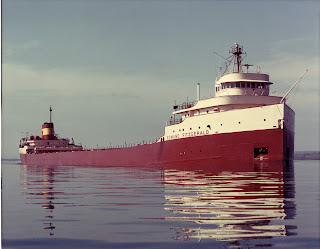
Michigan's waters have occupied countless other roles in personal, state, and national histories, which the Clarke explores in its digital exhibit. Its Great Lakes have been a 
The Edmund Fitzgerald
graveyard to hundreds of ships
; its northern freshwater springs have been touted as miracle healers. Its ports and straits have acted as home to both war and industry, while its waters hold a sacred, life-giving status for Indigenous communities

To the famous American novelist Ernest Hemingway, Michigan was "a great place to laze around and swim and fish when you want to. And the best place in the world to do nothing." To others, it’s the best place in the world to do something—for the Soo Locks, that’s 80 million tons of commodities navigating the St. Mary’s falls each year. For each of the hundreds of millions of others to come in contact with Michigan, its waters represent something unique and personal.

Abundant Waters taps into this complex tapestry, illuminating the webs of connection flowing through Michigan's waterways and tying together facets of history and human experience. The exhibit aims to help the public reflect on our complex and meaningful relationships with water and to help us understand how water connects us all across time and space. 

Canoe manifest bound for Drummond Island c. 1818

Ultimately, Abundant Waters explores the lakes and rivers of Michigan as cultural, spiritual, and commercial epicenters, ones that define and sustain the region physically, ecologically, and economically. It imagines water in its many forms—mover of industry, mode of exploration, borderlands between/hubs within nations and peoples, and carrier of story—and in its ultimate form, as the veins that carry the lives of not just Michiganders, but people everywhere. Visit the digital exhibit today, with its new features and extended access to photographs and primary documents, to discover for yourself how we see ourselves—and each other—in Michigan's great waters.

The Abundant Waters exhibit is funded, in part, by an award from the American Library Association as part of the ALA’s American Rescue Plan: Humanities Grants for Libraries program.

3D view of the Clarke's "Disasters" section of the exhibit

Monday, October 17, 2016

New Hemingway-Related Collection in Clarke

by Frank Boles

Portrait of Marjorie Bump, ca. 1916
On October 16, at the annual meeting of the Michigan Hemingway Society in Petoskey, the organization permanently loaned to the Clarke approximately one linear foot of material documenting Marjorie Bump’s relationship with Ernest Hemingway. Ms. Bump was a local Petoskey girl who met Ernest Hemingway in 1915. Her first name is given to the female protagonist in the Nick Adams short story, “The End of Something,” published in 1925.

After Hemingway’s death in 1961, Don St. John undertook a project to interview individuals who had known Hemingway to obtain first-hand accounts about the author. One of the people he contacted was Marjorie, by then known as Marjorie Main. Between 1965 and 1974, the two corresponded extensively. That correspondence now joins a bevy of resources related to Hemingway in Michigan found in the Clarke.

Georgianna Main, the daughter of Marjorie, wrote of her mother’s recollections about Hemingway in Pip-Pip For Hemingway (Bloomington, Ill.: iUniverse, 2010). The accounts found in Pip-Pip and in these papers are not consistent. For example, In Pip-Pip Georgianna reports her mother was taught to fish by Hemingway. In her recollection to St. John, Marjorie says she never went fishing with Ernest.

For a quick summary of the scholarly literature regarding Marjorie visit Project Muse, which reproduces a 2014 book review of Pip-Pip written by Matthew Nickel and first published in The Hemingway Review.

Before her death, Marjorie Main destroyed the correspondence with Hemingway she possessed. Thus, it is likely scholars will have a difficult time deciding if Marjorie chose to tell her daughter stories she thought Georgianna wished to hear or, if recounting events to St. John more than a half-century after they occurred, the inevitable tricks of memory led Marjorie to recall things in a way that differed from what had actually happened so long ago.

The Michigan Hemingway Society and the Clarke Library have worked together for more than a decade to document Ernest Hemingway’s life in Michigan. The relationship has been one that has benefited both organizations and we in the Clarke are extremely grateful to have the opportunity to work continually with the Society to find new information (with a Michigan twist) about one of the 20th century's most important authors.

Monday, November 30, 2015

Thanksgiving in the Clarke

By Marian Matyn

As a day to give thanks for all our blessings and those we love and our freedoms, I hope you all had a happy Thanksgiving. President Lincoln proclaimed a national day of Thanksgiving on Oct. 3, 1863. To read a copy of the proclamation click here: http://www.abrahamlincolnonline.org/lincoln/speeches/thanks.htm

Here is how Thanksgiving is represented three of the Clarke's collections.

First, we’ll look at the Geesje Visscher, Diary of our Grandmother, 1869-1901. This is a Dutch language diary (copy). Geesje married Mr. Visscher on May 2, 1841. In 1845, the Visschers sailed for the U.S. with Rev. Van Raalte, eventually settling in Holland (Mich.) by 1846. They had a large family, most of whom became or married ministers. Among other aspects of daily life, her diary discusses celebrating Thanksgiving in 1877. Here's how they did it:

Transcribed diary entry (p.64, transcribed by Mr. Clarence Jalving, from the Dutch) of Geesje Vander Haar Visscher.

The 29th of November we observed Thanksgiving Day as ordered in the President’s proclamation. It’s wintry and yesterday it snowed hard all day. Maria is home and so four of them went to church while my husband and I stayed home. The roads aren’t fit for buggy or sleight [sic] so they walked to church. We talked and read together and felt a profound sense of gratitude for all we had enjoyed throughout the past year. When the children came home they said that Rev. Pieters had preached from Psalm 29: ‘But in His temple He is honored by everyone.” We had a fine meal at noon and gave of our substance for the needs of the students and the poor. And so another Thanksgiving day was history.

This is a copy with a typed transcription of the diary. The diary is also available on microfilm. The original is at the Joint Archives of Holland, Michigan.

The second collection to look at is the Ursula Hemingway Jepson Collection, 1903-1951, which has a scrapbook that includes an original photo of the Hemingway family Thanksgiving dinner. Ursula (1902-1962) was one of famed writer Ernest's sisters.

Hemingway Family Thanksgiving, 1914

The third collection to mention is Jean Brinkman, Sadie Hawkins dance advertisments and letters (copies), 1949, 2014. Brinkman graduated from CMU in 1950. The first advertisement is for the weekend of November 5, 1949. It has seven characters and a letter written on the back to Jean's mom dated November 2, 1949. Jean discusses having asked Roger to the dance, thanks her mom for cookies and pearls, notes that she ate with Gamma Delta, is now treasurer of the Women's Glee Club, mentions her classes and going with Roger to the circus put on by the CMU community, and asks how she shall get home for Thanksgiving weekend. There is also an advertisement is for the weekend of November 18, 1950. It has eight characters and a letter written on the back to Jean's pop dated November 17, 1950, in which she discusses that she took Paul to the dance, had problems finding a boy whose date had not asked him ahead of schedule, which was against dance protocol, seating for a band trip, her classes, and that she has a ride home after her last class Wednesday for Thanksgiving.

Monday, August 5, 2013

Michael Artman and “Hemingway’s Paris”

by Frank Boles

On July 31, Michael Artman charmed an attentive audience with his presentation about “Hemingway’s Paris.” In 1997 Artman and his wife, Anita, made possible a vacation in France by exchanging their home in Port Huron with a French family, who in turn gave to the Artmans the keys to an apartment on Paris’ Left Bank. The Artmans soon realized that their new Paris “home” was only a few blocks away from the apartment Ernest and Hadley Hemingway had occupied when they lived in Paris during the 1920s.

Tuesday, July 30, 2013

Michael Artman Presents "Hemingway’s Paris”

The Clarke Historical Library will welcome Michael Artman on Wednesday, July 31 for a presentation about the Parisian quartiers that Ernest Hemingway called home during the 1920s.

Mr. Artman and his wife exchanged homes with a Parisian family and found themselves living in the Latin Quarter of Paris, only a few blocks from where Ernest and Hadley Hemingway lived when they moved to Paris in 1922. Long interested in the Hemingways, Mr. Artman’s vacation became a research trip into “Hemingway’s Paris,” walking the pathways traveled by Ernest and Hadley and visiting the haunts they found intriguing so many years ago.

Join us, as Mr. Artman takes us along for the journey. Retired educators from Port Huron, MI, Mr. Artman and his wife, Anita Shagena are both two-time CMU Alumni.

The presentation begins at 7:00 pm in the Park Library Baber Room and will be followed by a reception. Both are open to the public without charge.

For more information about this event please contact the Clarke Historical Library, 989.774.3352 or clarke@cmich.edu. Individuals interested in attending either event and in need of an accommodation should phone 989.774.1100.

Friday, April 19, 2013

Hemingway Family Scrapbook Obtained for the Library

With the Spring Semester wrapping up at Central Michigan University, the Clarke will be changing our Saturday business hours for the summer. This Saturday, April 20, will be the last Saturday until September that the Clarke will be open. We will keep the same 8 am to 5 pm, Monday to Friday hours. If you have any questions about our hours of operation, please call 989-774-3352.

Hemingway Family Scrapbook Obtained for the Library
 

by Frank Boles

Left to right you’re looking at Ernest Hemingway, sister “Sunny” rowing the boat, family friend Paul Haase, and in the water Ursula. The picture was taken September 1915 at Walloon Lake
 

Sometimes you plan for months or even years to make possible a major, new acquisition. Sometimes a major, new acquisition is a mad scramble.

Three weeks ago the library staff scrambled, successfully, to acquire a treasure; a scrapbook created by Grace Hall Hemingway for her daughter, Ursula covering the years 1913-1916. As many of you know, over the last several years the library has built a strong collection relating to the years Ernest Hemingway spent in northern Michigan. Ernest was the second child born to Grace Hall Hemingway and her husband Clarence Hemingway. Ernest's sister Ursula was the third child born into the family.

Mother Grace dutifully kept scrapbooks for each of her children. Each book was rich in documentation regarding the family’s annual stay at their summer cottage along Walloon Lake, full of personal notes and family photographs. The scrapbooks are a picture of early twentieth century cottage life “up north,” a cottage life one of America’s great authors drew upon extensively in writing the Nick Adams stories.

Problem was, the scrapbook showed up out of nowhere. Bryan Whitledge, a Clarke staff member who had been asked to look through an online auction catalog for some children’s books, reported that while the children’s books offered for sale were not very interesting, there was, “ bunch of Hemingway stuff, maybe a Michigan connection around lot 60.” Lot 64 was described this way:

Photo album, approximately 7½x10¾”, consists of 100 pages of family memorabilia including approximately 121 original family sepia-silverprint photographs ranging in size from 2x4” to 7x8”, most are 3x5½" or period postcard size. Nearly every photograph in the album is identified in Ursula Hemingway’s very fine and readable hand, often to the length of a short paragraph.

Hemingway family photograph and memorabilia album put together by Ernest Hemingway's younger sister, Ursula. Noted on the flyleaf in her hand as “Ursula Hemingway, Book IV from July 1st 1913 to July 1st 1916, Eleven years 2 months to Fourteen years and 2 months old”. The photographs well document the Hemingway family during the early 1910s, with images of children partying, family dinners, group images before the city house, and the Walloon Lake summer house in Northern Michigan that the family loved and that was so much a part of the Hemingway life. There are photographs of the Hemingway grandparents, the father, Dr. Clarence Hemingway, (including a 1914 photograph of him with his famed “Tin Lizzie,” from which he made his legendary house calls), and a wonderful image of the family Thanksgiving dinner at the Grandparents. There are approximately 21 images showing the young Ernest, many in group family shots, some individual pictures with him as the young fisherman holding trout, playing on the waterfront in and around boats and canoes. One small portrait photo is a terrific image of the smiling young Ernest. During this period the last and youngest Hemingway child, Leicester, was born, and there are a number of photos of him in his infant years, as well as his printed birth announcement. Scattered throughout the album are numerous programs of recital, school, and church events in which the Hemingway children participated, approximately 25 letters in envelopes and postcards mailed to young Ursula, approximately 30 pieces of original art by Ursula, who would become an accomplished artist in her later years. A 12 page holograph diary of a trip Ursula took with her mother, Grace, to Nantucket in 1914, along with photographs and an original miniature watercolor presented to Ursula by the Nantucket artist Marianna Van Pelt. One wonderful photograph is labeled as “the 6 children taken together for the first time”, complete with a smiling Ernest and everyone in their Sunday best. Ursula learns the typewriter, and makes a list of all the family at a Walloon Lake birthday party, including Ernest. Another photograph shows Grace and Dr. Hemingway’s 19th wedding anniversary with all 6 children together, 3 letters laid in, are written from Ursula to her mother at Walloon Lake, along with a separate note to “Ernie”, and much more.

Ursula Hemingway, (1902-1966), graduated from Carleton College in Minnesota where she met her future husband Jasper Jepson. After marriage in 1925 the Jepsons settled in Honolulu where Mr. Jepson was a Vice President of the Bishop Trust. Ursula became a recognized painter and the Jepsons had one daughter. It was through this daughter's family that this Hemingway family material descended until the present. A remarkable survivor and truly unique archive of items that document the early life of Ernest Hemingway and his family in the Oak Park, Illinois and Walloon Lake years.

Actually the auction house had it slightly wrong – the handwriting was that of Grace Hall Hemingway, not Ursula, but the overall description was accurate, and tremendously exciting. As the saying goes, “they aren’t making any more of these,” and Hemingway family scrapbooks are a fascinating window into the experiences that directly shaped the writings of one of the ten Americans who have won the Nobel Prize in literature.

Bryan had been looking through the catalog on March 13. The sale was on the next day. That left us a little less than twenty-four hours to find the $10,000 to $15,000 which the auction house estimated the item would “fetch” in the language of the business.

Fortunately over the years the Library has developed a network of Friends very interested in the Hemingway collection. A long day’s worth of phone calls and emails found support from eight donors, which, when joined to money “in the bank” and made available from the Friends of the Libraries annual giving fund and also spendable income from the Clarke’s own endowment, made the purchase possible.

We are thrilled to have acquired Ursula Hemingway’s “up north” scrapbook, and extremely grateful to all of those who helped make the acquisition possible. Drop by and see it one day – you’d never guess, just thumbing through the volume, that the good looking young teenage boy in the pictures was destined for greatness, but in retrospect carefully inspecting those pictures, and the rest of the book, offers important insights into the experiences that shaped the writings of Ernest Hemingway.

Tuesday, February 22, 2011

Picturing Hemingway's Michigan

By Frank Boles

(to see a podcast of this February 16, 2011 presentation at ITunes U, click here)

Michael Federspiel, author of Picturing Hemingway’s Michigan (Detroit: Wayne State University Press, 2010) spoke at the Library on February 16. Mike offered an interesting, nuanced, and informative presentation that looked at three questions:
  • What was Petoskey like at the beginning of the 20th Century?
  • How did the Hemingway family compare to the many other “summer people” who came to northern Michigan “for the season?”
  • How did northern Michigan influence Ernest Hemingway’s fiction?
Petoskey, in 1873, was little more than a point on a map. Two European families had settled in the area. There were no hotels, no railroad connections, and most importantly no tourists. By the beginning of the 20th Century, the community had radically changed. It was home to 6,000 permanent residents. Another 25,000 or so individuals spent the summer in or near the community. In addition a vast number of “day visitors” came to the town. By one estimate in 1908, 128,000 day visitors came to Petoskey.

A vast infra-structure of trains and ships brought these visitors to the community. In 1906 13,000 trains arrived in Petoskey between June 25 and September 30, averaging an amazing 124 trains per day, or put another way, one train every 5 minutes. To house these many visitors, fourteen hotels offered 2,000 rooms for rent each night.

Petoskey had become a major tourist destination. Among those who came regularly to partake in its attractions were the Hemingways. They had built a cottage on Walloon Lake in 1899. Each year the family traveled from their home in suburban Chicago to spend the summer on the lake. How they spent their time during the summer would resonate with anyone who goes “up north” today. They spent time outdoors.  They regularly swam in the lake. Hunting, and in particular fishing, were regular activities. On rainy days they read books. Every now and again they traveled “to town” for “supplies.”

What is most notable, Mike pointed out, is how typical the family was. Biographers of Ernest Hemingway sometimes strain to find that moment when the young Ernest Hemingway revealed himself to be the great writer he would become. The truth is there was no such moment. The Ernest Hemingway who spent his summers at a cottage on Walloon Lake was a typical child. He was not “Ernest Hemingway, writer of great promise.” He was simply, “the Hemingway’s boy” doing what boys do during the summer.

Yet something about those years “up north” never left Hemingway. Late in his life he wrote a reminiscence about the years he spent as a young writer in Paris, where his fame as a writer first emerged. Eventually published as A Moveable Feast, in it Hemingway wrote:

“I sat in a corner [of a Parisian café] with the afternoon light coming in over my shoulder and wrote in the notebook.  The waiter brought me a café crème and I drank half of it when it cooled and left it on the table when I wrote.  When I stopped writing I did not want to leave the river where I could see in the pool, its surface pushing and swelling against the resistance of the log driven piles of the bridge. The story was about coming back from the war but there was no mention of the war in it.  But in the morning the river would be there and I must make it and the country and all that would happen. ”

The bridge he recalled so vividly was almost certainly in Seney where he began a fishing trip with two friends in August 1919. In many ways the trip to Seney and beyond was an important one for the young Ernest. Hemingway had returned from World War I slowly recovering from physical injuries. After his arrival at his parent’s home in suburban Chicago, he suffered a perhaps even more devastating emotionally loss when the woman he thought would marry him ended their relationship. In the 1920s, while living in Paris, Hemingway would transform his fishing trip to Seney and beyond into the story, “The Big Two Hearted River,” a story of a young man suffering in ways not well defined and seeking solace in nature. Near the end of Hemingway’s life, when reflecting upon what he had done during those years in Paris, that trip to Seney, that bridge, the rivers he fished while in the Upper Peninsula, and the emotions that played across his heart and his mind during that difficult summer, were still vivid in his imagination.

As Mike Federspiel concluded, trying to explain how Hemingway used his Michigan experiences to create world-renowned fiction requires and explanation of genius. It is something those who lack that genius likely cannot do. But it is perhaps enough to recognize that somehow “the Hemingway’s boy” used his inexplicable gifts to reimagine in words of beauty and power much of what had happened and much of what he had felt during his many years in Michigan. The stories that resulted created memorable fiction as well indelible images of summer “up north.”

It was a wonderful evening that the audience greatly enjoyed and from which they greatly profited. The Library was very pleased to have been able to make the event possible.