Tuesday, September 13, 2022

Celebrating CMU's 130th Anniversary

by Magdelyn Gipe

As we embark upon a new academic year, Central Michigan University celebrates the 130th anniversary of its founding. On September 13, 1892, the Central Michigan Normal School and Business Institute (it wouldn’t be known as Central Michigan University until 1959) opened its doors for the first time. Of course, the doors that were opened were in downtown Mt. Pleasant, about one mile north of the current Central campus. 31 students were in attendance that day, with classes taught in rental rooms upstairs in the Carpenter Building, which sat on the southeast corner of Main and Michigan streets. Work on the first campus building started six days later, on September 19, 1892. The building, known as “Old Main,” opened in 1893, when students first attended classes on what is now the Central campus. 

Central's "Old Main" Groundbreaking, September 19, 1892

From the beginning, Central largely existed to train and educate teachers. As such, Principal Charles Bellows organized the school into five departments: Normal (training teachers), Academic, Commercial, Industrial, and Music & Art. The Commercial Department is what gave the school the name, “Central Michigan Normal School and Business Institute”; at that time, “business” often meant basic accounting, ledger-keeping, stenography, and penmanship. Bellows is personally responsible for the Music & Art Department, using his own funds to organize a Conservatory for Music. 

Most students who attended Central that first year were from rural areas in and around Isabella County, and often were eighth-grade graduates. In the early days of the institution, it was not uncommon for students to attend for a short time before obtaining a teaching certificate by taking a county teaching exam that allowed students to fill teaching jobs in rural one-room schoolhouses throughout central and northern Michigan. Whether some of those in the first class of students left Central because they passed a county teaching exam or because of another reason, twenty of the original 31 students graduated from Central that first year.

In the 130 years since that historic day, Central Michigan University has substantially changed. Instead of 31 students on the first day of classes, there are over 15,000 students at Central this fall. Classes aren’t held in rental rooms in downtown Mt. Pleasant anymore, but in any of the more than 25 academic buildings. Campus has grown from an initial investment of ten acres and $25,000 to a world-class university sitting on nearly 500 acres with an annual operating budget of over $400 million. What has not changed over the course of 130 years are the fired-up attitude, the can-do spirit, and the genuine kindness Central’s students bring with them each fall.

CMU Students in Kelly/Shorts Stadium at Leadership Safari, 2022


Thursday, July 7, 2022

Abundant Waters Digital Exhibit Now Online

by Sara Daniels

3D view of the Clarke's "Fur, Freighters, Fuels" section of the exhibit

The Clarke Historical Library officially opened its most recent exhibit,
Sunset at CMU Biological Station,
Beaver Island
Abundant Waters: Our Most Precious Resource
on February 22, 2022. Now, we are proudly presenting the exhibit's digital companion. Exploring the state's cultural, environmental, political, and economic history through its 3,200 miles of freshwater coastline and 76,000 miles of rivers, this website offers new ways to approach the exhibit's driving question: how often do we actually think about our relationship with Michigan's most precious resource? 

Home to over 20% of the world's surface freshwater supply, Michigan is a state surrounded by, defined by, and embroiled in issues of water. The digital exhibit of Abundant Waters delves into the depths of Michigan's past in order to uncover our lasting connections with water and reveal how our future and the future of Michigan’s lakes and rivers are one in the same.

The digital exhibit is a culmination of months of research and community efforts. With contributions from WCMU Public Media, CMU professors and students, and members of the Saginaw Chippewa Tribal Conservation Community, the exhibit approaches Michigan's waterways through a multitude of perspectives. It provides an engaging and multidimensional platform on which to experience for yourself Michigan's greatest resource—water. From a 3D perspective of the Clarke’s physical Abundant Waters exhibit to a series of videos exploring the conservation of Michigan’s waters, the digital exhibit contains a number of fresh features and new approaches to exploring this topic and showcasing the many ways humans have interacted with and been affected by water.


Ernest Hemingway canoeing in northern Michigan


Take, for instance, one of Michigan's flashier roles as a rum-running capital, with 75% of the alcohol smuggled into the United States during Prohibition passing through one of Michigan's water borders with Canada. Or consider Michigan's status as the “Arsenal of Democracy” during World War II—it went beyond building bombers, with one of Michigan’s own Chris-Craft ships among the first to make landfall in Normandy on D-Day.

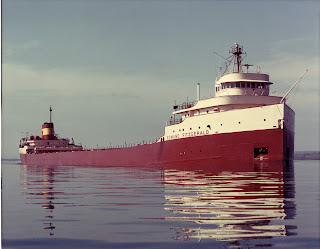
Michigan's waters have occupied countless other roles in personal, state, and national histories, which the Clarke explores in its digital exhibit. Its Great Lakes have been a 
The Edmund Fitzgerald
graveyard to hundreds of ships
; its northern freshwater springs have been touted as miracle healers. Its ports and straits have acted as home to both war and industry, while its waters hold a sacred, life-giving status for Indigenous communities

To the famous American novelist Ernest Hemingway, Michigan was "a great place to laze around and swim and fish when you want to. And the best place in the world to do nothing." To others, it’s the best place in the world to do something—for the Soo Locks, that’s 80 million tons of commodities navigating the St. Mary’s falls each year. For each of the hundreds of millions of others to come in contact with Michigan, its waters represent something unique and personal.

Abundant Waters taps into this complex tapestry, illuminating the webs of connection flowing through Michigan's waterways and tying together facets of history and human experience. The exhibit aims to help the public reflect on our complex and meaningful relationships with water and to help us understand how water connects us all across time and space. 

Canoe manifest bound for Drummond Island c. 1818

Ultimately, Abundant Waters explores the lakes and rivers of Michigan as cultural, spiritual, and commercial epicenters, ones that define and sustain the region physically, ecologically, and economically. It imagines water in its many forms—mover of industry, mode of exploration, borderlands between/hubs within nations and peoples, and carrier of story—and in its ultimate form, as the veins that carry the lives of not just Michiganders, but people everywhere. Visit the digital exhibit today, with its new features and extended access to photographs and primary documents, to discover for yourself how we see ourselves—and each other—in Michigan's great waters.

The Abundant Waters exhibit is funded, in part, by an award from the American Library Association as part of the ALA’s American Rescue Plan: Humanities Grants for Libraries program.

3D view of the Clarke's "Disasters" section of the exhibit

Friday, July 1, 2022

Good Luck, Christa Clare!

by Bryan Whitledge

Since Christa Clare joined the Clarke Historical Library, a lot has changed: the Clarke moved from the fourth floor of the Park Library to the first floor with a (not so) brief layover at Rose Arena, dozens of staff members as well as members of the Clarke’s governing board have come and gone, hundreds of students have earned some extra money working part-time in the Clarke, thousands of books and records have been acquired, and tens of thousands of researchers have made use of the library. Through all of the changes, Christa has been central to the success and excellence of the Clarke.

Christa Clare Portrait

A good many of the Clarke’s regular visitors and supporters would count Christa as a friend. Her warm smile and genuine kindness have been available to everyone who has walked through the doors—attendees of speaker series events, CMU employees coming into the library on business, Clarke board members coming for the semiannual meeting, donors dropping off materials to add to the collections, new student employees on their first day, and more. Countless relationships with donors, benefactors, and supporters have started with Christa’s friendly, “Hi, how are you today?” offered to anyone who has walked into the Clarke. It is no overstatement to say that there has been no better person to welcome visitors, to converse with people about anything and everything they wished to talk about, and to make everyone feel like the Clarke was an excellent place that would take care of history and make it available to everyone.

For the staff, Christa has meant more to our success than she will ever know. As with many offices and workplaces, most people have little idea all of the little cogs, widgets, and levers that are needed to make the Clarke machine move. Christa has been relied upon to keep the machine running by handling a multitude of behind-the-scenes tasks. Because it would be impossible to list all of her contributions, we have offered up a very small sampling of all that she has provided and has helped with during her time at the Clarke (in no particular order): 

Christa and a colleague
gathering, sorting, and keeping track of all sorts of financial reports, helping hire students, purchasing new books, purchasing old books (but new to us), tracking acquisitions, creating lists of donors, providing the address of an old colleague, covering the reading room when we are short-staffed, purchasing supplies, processing payments, adding bibliographic information to the catalog entries, making sure student staff get paid, reporting broken… everything—lights that won’t turn on, copy machines that won’t act right, HVAC systems that are too hot or too cold, phone lines that won’t operate, etc., managing our memberships in dozens of historical organizations, arranging for catering, giving us a band-aid in the all-too-frequent event of a paper cut, and being a sympathetic ear and a friendly conversationalist. 

We’ve counted on her to relay our messages that we would be absent. And we’ve all come to expect that she will wish us well and hope we feel better before she hangs up the phone.

Getting the job done is great, but Christa takes it one step further—she infused her personality, compassion, and zest for life in the Clarke’s work culture. Every staff member, including every single student employee, has received a birthday card signed by the entire staff each year… and if a person’s birthday falls during the winter break or when a student is away during the summer, you can bet that Christa will put a stamp on it and make sure the birthday celebrant gets their card. Not as joyous, but possibly more meaningful, she also has made sure that sympathy cards were circulated for a colleague who suffered a loss or illness. These small gestures have gone a long way to make staff members feel welcome and valued.

When it comes to a making the most of life, Christa walks the walk. It has not been unusual to come to work in the morning and see a container of cookies awaiting the students—why? Because Christa woke up and thought fresh homemade cookies would brighten our day. She has shared the bounty of her garden with the staff because, why not? When she feels like fresh flowers will spruce up her space, she brings in fresh flowers. And for those who say they don’t have a green thumb, Christa never gives up on the aspiring horticulturalist and continues to bring in cuttings and shoots and offers some helpful advice.

The Clarke staff as "Scrabble" for Halloween, 2012

Everyone has shared a laugh with her, and a lot of those laughs start with ideas for social events. The Clarke’s Halloween costumes at the annual staff potluck were second-to-none… for a long time, at least… and she was always the ring-leader master-minding the whole operation. You can guess who wiped away the competition in the winter ugly sweater contest. And you know who has been behind-the-scenes making sure there were plenty of chairs, napkins, cups, and, most importantly, good attitudes at a barbecue for graduating students. Just when the winter doldrums were really settling in for everyone and she could tell, Christa would suggest that the staff hold a tea exchange and tea party to lighten our spirits. It was just what we needed.

Similar to how one book or one box of records is only a sliver of everything that the Clarke holds about Michigan history, this is merely a sliver of how meaningful Christa has been to Clarke and to the lives of the staff members. We wish her the absolute best in her retirement.

Friday, April 29, 2022

Help the Clarke Historical Library and the Museum of Cultural and Natural History Preserve CMU’s Pandemic Experiences

To document and preserve the various experiences of the CMU community during the COVID-19 pandemic, the Clarke Historical Library (Clarke) and the Museum of Cultural and Natural History (Museum) encourage CMU members, students, faculty, and staff, on- and off-campus, to share their documented personal experiences during COVID-19 and contribute them to the Clarke and Museum. When future students, scholars, and researchers seek to understand what it was like at CMU during the pandemic, these materials will provide a first-person account.

Submission process:

If you are a current CMU faculty, staff or student please fill out this form. A CMU email is required. Your email will not be shared or sold. You will be required to sign an agreement allowing the Clarke to preserve your submission, and you will receive important information about copyright and the use of your content. The Clarke and the Museum are not obligated to keep everything that is submitted. You can submit materials and the form as often as you like. This project is focused on submissions from individuals or small groups of people.

If you work for a CMU unit and have questions about preserving your office's records, please contact Bryan Whitledge.

If you are a Mount Pleasant, Michigan, community member who is not a current CMU student, faculty, or staff member, with relevant information you wish to donate, please contact clarke@cmich.edu before submitting material.

If you have physical artifacts or object, please contact the Museum at cmuseum@cmich.edu.

Materials in the following formats that could normally be uploaded to Google Drive will be accepted: Images (jpg, png), Videos (mp4, mov), Audio (mp3), and Text (txt, pdf, docx, doc) files. If you want to donate a physical printed or written item, please submit a digital image, and indicate that you wish to give it to the Clarke in the description field of the form. Clarke staff will contact you.

If your submissions are works you created with others, such as interviews or group project, the Clarke requires permission from everyone who contributed to the work, including co-authors, whether students, classmates, friends, and family. We will not retain the material if we do not receive all relevant forms. Only one person needs to attach the files to the form.

Materials will first be reviewed and processed by Clarke staff, so they will not be available to the public immediately.

Campus resources:

For CMU’s updates on the pandemic and available resources, visit https://www.cmich.edu/about/covid-19-information-and-resources.

For informational resources on the United States’ response to COVID-19 see https://libguides.cmich.edu/c.php?g=1010890&p=7517036

What to submit:

Here are some examples of what you may wish to submit:

Students:

  • Course assignments you completed related to the pandemic
  • Images or videos from moving off-campus due to the pandemic
  • Communications with your family about what was happening when campus closed
  • Communications with administrators or faculty negotiating issues related to travel, internships, visa status, living arrangements, or food and dining
  • Student organization activities that may continue over a distance or volunteer work done in response to the pandemic
  • Reactions to campus events being canceled or delayed, including but not limited to: graduation, sports, theatre or musical performances, Study Abroad, or trips
  • Your remote learning experience or how your classes changed when they went virtual

Faculty:

  • Redesigned course materials for remote delivery, new assignments, or syllabus changes
  • Communication with your students and colleagues
  • Plans for pausing or adapting research projects while campus was closed

Staff:

  • Work you did on-campus as essential employees
  • Experiences in student services such as dining halls, dormitories, and other services that shut down
  • Messages of encouragement from co-workers and the community
  • Changes to your job due to working remotely

Health Care Providers and Patients (CMED and CHP):

  • Your experiences preparing for or treating COVID-19 patients
  • The effect on your work with patients who need medical care unrelated to COVID-19
  • How your workplace, schedule, or job duties have changed
  • Your experience being treated for or recovering from the virus

General:

  • Journal or diary entries about the impact of the pandemic on your life
  • Interviews with friends or family members
  • A description of your schedule or routine during quarantine
  • Images of your new work space
  • What it’s like to work at an essential business or organization

Acknowledgement:

Aspects of this project were adapted from similar efforts by the University of Michigan Bentley Historical Library, Michigan State University Archives, University of North Carolina Charlotte Special Collections and University Archives, and the University of Virginia Library Digital Collecting Toolkit. Thank you to Katie Howell of J. Murrey Atkins Library, University of North Carolina Charlotte for allowing us to use text and ideas from UNCC’s “Contribute Your Stories of the COVID-19 Outbreak” website.

Thursday, March 31, 2022

Abundant Waters: Our Most Precious Resource

 By Gillian Macdonald 

Entrance to the Clarke Historical Library

Among a host of other exciting things happening in 2022, the Clarke Historical Library’s new exhibit explores a topic close to the heart of every Michigander…water and its value to our society. Abundant Waters: Our Most Precious Resource tackles an important question: how often do we actually think about our relationships with this most precious resource? With water at the forefront of our minds in today’s climate, the abundance of freshwater in the Great Lakes State is an aspect of our lives that we often take for granted. The Clarke Historical Library’s exhibit explores the many ways that abundant freshwater defines Michigan through five themes—politics, recreation, commerce, disasters, and the spirit nurturing aspect of water. Highlights include the construction of the Mackinac Bridge, canoe manifests from the fur trade, the pollution of the Pine River watershed and the ongoing clean-up, and Hemingway family scrapbooks showing a young Ernest Hemingway and his family enjoying Walloon Lake and the Little Traverse Bay region.

"Political Waves" Wall
Water is arguably Michigan’s defining feature. The Great Lakes State is surrounded by and encompassed in an abundance of water, freshwater to be exact. In Michigan, you are never more than six miles from a lake, stream, or waterway. Michigan has more than 11,000 inland lakes, 76,000 miles of rivers, 6.5 million acres of wetlands, and more than 3,200 miles of freshwater coastline. For thousands of years, the Great Lakes—and Michigan’s water in general—have provided people with freshwater for survival, spiritual rejuvenation, a means of travel, and a place to have fun. In the last few decades, conservationism has reinforced the importance of these natural wonders. Abundant freshwater is at the root of why many choose to live, work, and play in the Great Lakes State. Explore the relationships that connect us to these bodies of water through recreation, politics, commerce and transport, our defining geography, early tribal histories, nurturing water springs, and through environmental stressors.

In researching and designing the exhibit, we had to first decide on a mission statement and then themes that would best illustrate this. For all intents and purposes, this is the hardest part. What does this exhibit need to project and what is the goal? The Clarke’s voluminous collections actually answered this question for us. The sheer abundance of water and activity connected to the water found in the books and manuscript collections illustrated that all aspects of life in Michigan have a relationship with the water. Although most of us have a general awareness of the water around us—many would even proclaim a deep love for the Great Lakes State’s water—how often do we truly contemplate our relationships with it? 

Installation of Recreation wall panels

Our ideas and imaginations came to life thanks to the capable hands of John Metcalf of Good Design Group. His striking designs help tell the stories of our relationships with water. I would like to thank not only Bryan Whitledge, Kathy Irwin, and Marian Maytn for their editorial help and suggestions, but also Colleen Green, Director of the Office of Native American Programs & Student Transition Enrichment Program, for her guidance, and members of the Saginaw Chippewa Tribe for their participation. The production of the exhibit wouldn’t be possible without Rebecca Zeiss, the CMU Sign Shop, CMU Facilities Management, and everyone in between. Installation of the exhibit was made all the more enjoyable and efficient with the helping hands of our capable student employees, Camille Dixson, Nova Moore, David Wright, Maggie Gipe, and Ben Ackley. 

We officially opened the 2022 exhibition on February 22. As part of the Speaker Series, Jim Diana retired director of the Michigan Sea Grant, kicked off the exhibit with a discussion about the effectiveness of Great Lakes environmental regulations in protecting our incredible ecosystem. 

Intrigued? Please come and visit us! Explore how we are connected to water through recreation, politics, commerce and transport, our defining geography, early tribal histories, nurturing water springs, and environmental stressors.

Installation of the floor graphic

In true Clarke fashion, we have also started construction on our digital exhibition. This project is being designed and created as a complementary counterpart to our physical exhibition at the Clarke Historical Library at Central Michigan University. Under construction since February 2022, the digital exhibit is a platform dedicated to Michigander’s relationship with their water resources. One particularly important theme we are exploring is the future of Michigan’s water. Crowd-sourced videos and audio answers to these important questions can be found on our exhibit website. 

Participants responded to one or more of these questions:

1. How can we protect our most precious natural resource?

2. Why is protecting Michigan’s freshwater so important?

3. What does it mean to be a good steward of the water?

4. What does the future hold for the Great Lakes & water in Michigan?

5. What are you doing to protect the water? Should we be doing more?

6. How do you see our policymakers helping to preserve this resource?

Digital Exhibit

If you would like to participate in our digital exhibit by responding to one or more of these questions, please get in contact with us at: clarke@cmich.edu. Check back for news about the public launch of our Abundant Waters digital exhibit in the coming weeks.

The Abundant Waters exhibit is funded, in part, by an award from the American Library Association as part of the ALA’s American Rescue Plan: Humanities Grants for Libraries program.